This rich and profound concept points to a central, universal human experience that has become particularly relevant in our time. The theme encourages artists to explore the many intertwined layers of shelter through the language of ceramics. The approach may begin with the most tangible forms of physical shelter: the idea of home, dwelling, or protective structures. It may also appear as the ancient archetype of the life-preserving vessel that stores food and water, or as building materials—brick, tile, ceramic elements—that create physical safety. At the same time, shelter can also be personal and psychological: a space of inner peace, creative retreat, or intimate processing of trauma. The form, weight, and texture of a ceramic object may evoke feelings of comfort, protection, or even confinement, functioning as a kind of psychological shield.
Today, the concept inevitably connects to major social and political issues of our time: migration, statelessness, and the protective force of cultural identity and community.
An artwork may reflect on the physical and mental realities of borders, or on the artist residency itself as a temporary sheltering community. It may also extend to the increasingly urgent topic of ecological shelter, examining our planet as a fragile, shared home and the pressures of displacement caused by climate change.
The aim of the symposium is for participating artists to respond to the theme “Shelter” in the broadest possible sense. They are encouraged to choose an aspect that resonates with them, drawing from their own life experiences, cultural background, and artistic interests. Whether through an abstract form, a figurative work telling a personal story, or an installation functioning as social commentary, the goal is to foster diverse, thought-provoking, and deeply human artistic responses.
We trust that the theme will serve as an inspiring starting point for all invited artists and provide space for a wide range of personal creative expressions.
MARIYA ALIPIEVA
Bulgaria
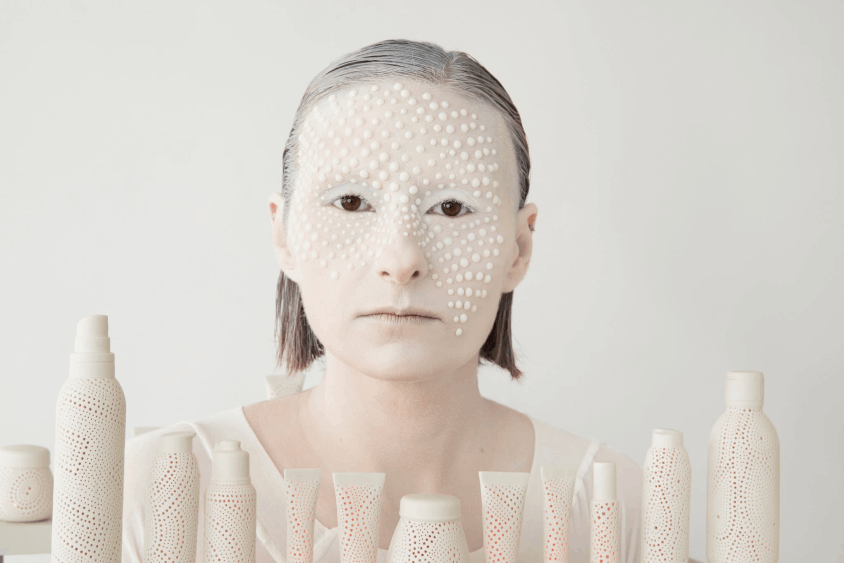
Mariya Alipieva is a multidisciplinary artist born in Bulgaria in 1981, living and working in Spain since 2003. After graduating with a degree in Animation at Art College Sofia (Bulgaria), she moved to Mallorca to study a Higher Level Education Cycle in Artistic Ceramics at Art and Design High School of Palma de Mallorca. She also holds a BA in Fine Arts and an MA in Artistic Production and Research from the University of Barcelona. Nowadays, she is a member of the International Academy of Ceramics (IAC) and the Assembly Platform for Catalan Artists (PAAC).
Her projects explore the intimate relationship between individuals and their environment. Her artistic production delves into the elements that surround us and how we shape ourselves to conform to the standards imposed by contemporary society. Through her work, she invites the public to reflect on the acts and rituals ingrained in the first-world lifestyle, which are often closely related to constant concern for physical appearance and social status.
Artist website
BOLEMAN BENCE
Hungary
JOVANA ČAVOROVIĆ
Serbia
Jovana Čavorović is a Belgrade-based ceramic artist whose works are characterised by a deep connection with ceramics, a passion for exploring the natural world and for pushing the boundaries of what is possible with this craft. One of the features of Jovana's work is her dedication to experimentation. She constantly experiments with clay, attempting new techniques and materials to create innovative forms and textures. Jovana graduated from the Faculty of Applied Arts, University of Belgrade, and received her master's degree in 2010. In 2020, she completed a two-year study at the Tajima City Ceramic Technical Centre in Japan under the mentorship of artist Harumi Nakashima.
Artist website
KARSAI ZSÓFIA
Hungary
Knowing, seeing and feeling everything that is going on around me in the world, I chose the artistic path of not reflecting, criticising and assessing any of that but rather enabling the viewer and myself to rest a little in this madness. I offer my objects as passageways towards introspection.
Zsófia Karsai is a ceramic artist born in Budapest, Hungary. She studied Design at the University of Crafts and Design, Budapest and received her Doctor of Liberal Arts degree from the Moholy-Nagy University of Art and Design in 2010.
Zsófia Karsai’s works have been exhibited nationally and internationally and are part of prestigious collections at institutions such as the Museum of Applied Arts (HU), International Ceramics Studio Kecskemét (HU), Machida City Hall Tokyo (JP), Mark Rothko Art Centre (LV) or Yingge Ceramics Museum (TW). She is also a member of the International Academy of Ceramics.
Artist website
YURIY MUSATOV
Ukraine
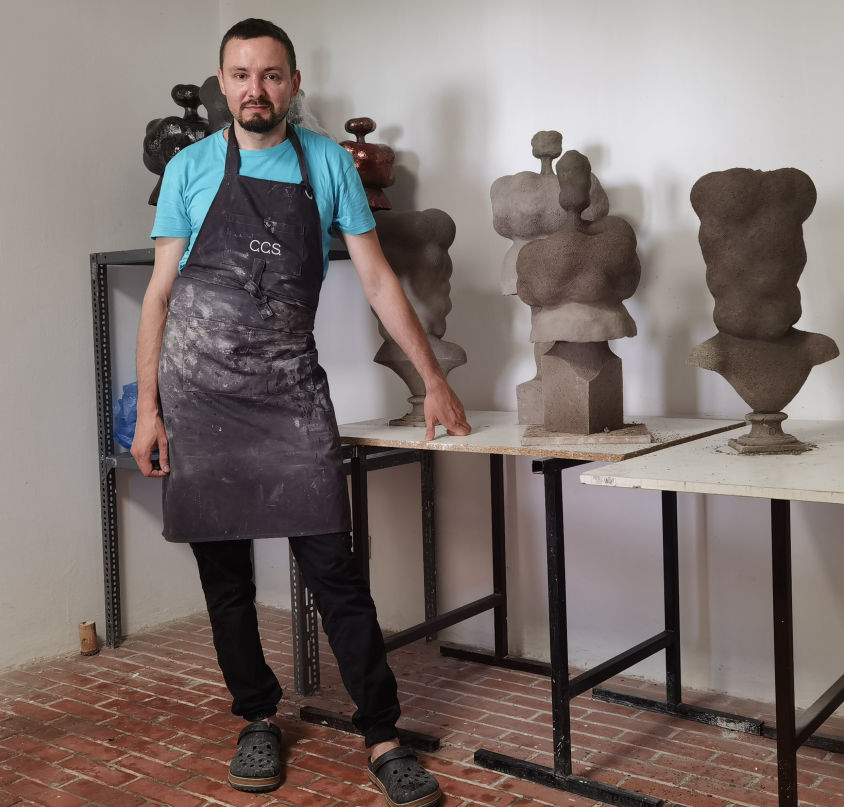
Before the outbreak of war, Musatov lived and worked in Kyiv. He taught ceramic art to young talents and organized exhibitions for his students. In 2019, his solo exhibition Invasion was held in Kyiv, where he presented his groundbreaking Aliens series for the first time—works that marked a turning point in his artistic journey. Invasion was an exhibition born out of a premonition of something inevitable.
My work emerges at the intersection of personal experiences, global upheavals, and universal questions of existence. In my practice, I explore themes of gender identity, the concept of ancient alien contact, and humanity’s place in the cosmos, intertwining myths, history, and science fiction.
A central idea in my projects is the notion of humanity as part of a grand experiment or as descendants of settlers from distant worlds. I aim to provoke the viewer to reflect: can we trace our origins to the stars, and how would that reshape our understanding of ourselves?
REJKA ERIKA
Hungary
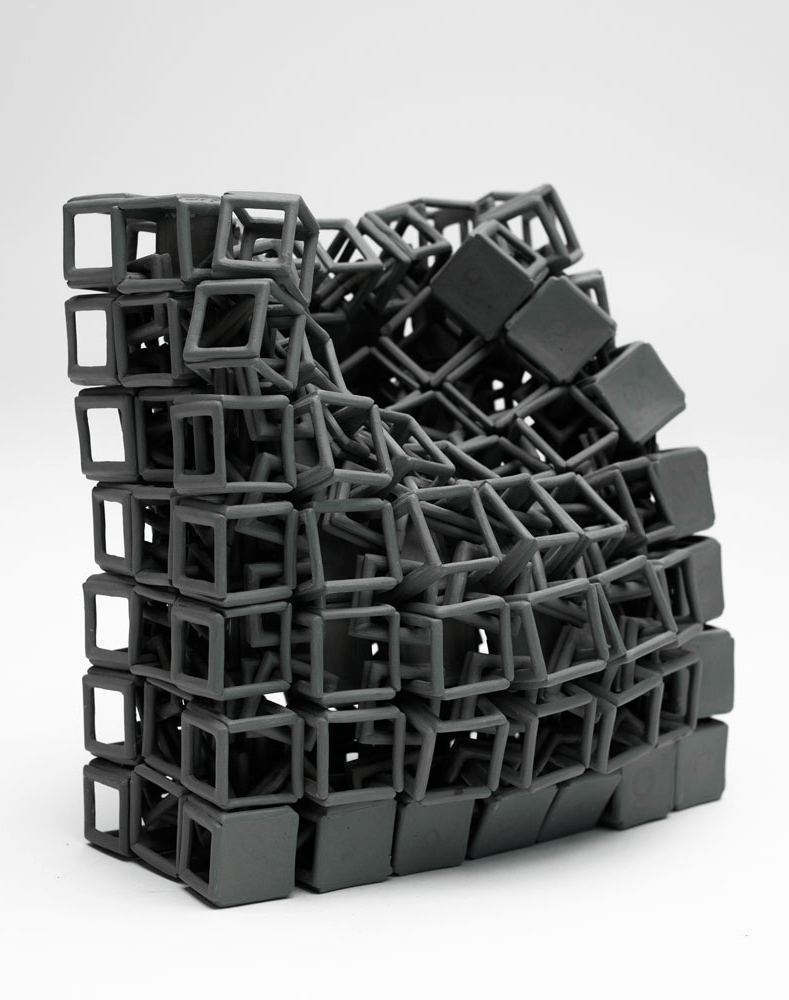
I am a porcelain designer. Ceramic and porcelain art has traditional boundaries because of the material’s role in everyday life. As an artist, I play with the gap between the traditions and innovations. Usually I work with, and sometimes work against to these preconcepts, like: tradition- innovation, fragility-flexibility, timeless-temporary, worthless-valuable, quality-quantity, the surface of the glazed and unglazed porcelain, hight quality-mass quality, etc.
My aim was to make people rethink these preconception, and meet with the porcelain material in a new way. When the owner realize that the structure made from porcelain, and the structure is mobile, their confusion becomes even greater. The sound and the beauty of the clear material’s colour, and it’s tactile impression helps to maintain this relationship. This special situation helps to realise what beautiful material is the clear and pure porcelain.
During the perception of a work of art, regardless of the creator’s or designer’s concept, the object is interpreted individually. This not only creates new approaches, but also changes the situation of the object, and this influences the creation itself also. These influences are flexible, and sometimes could turn into opposite, and this flexible porcelain sculpture shows these rules's flexibility with it's mobility and variability.
What you see on the pictures, is just one position from many other possibility.
Artist website
SAERI SEO
Korea
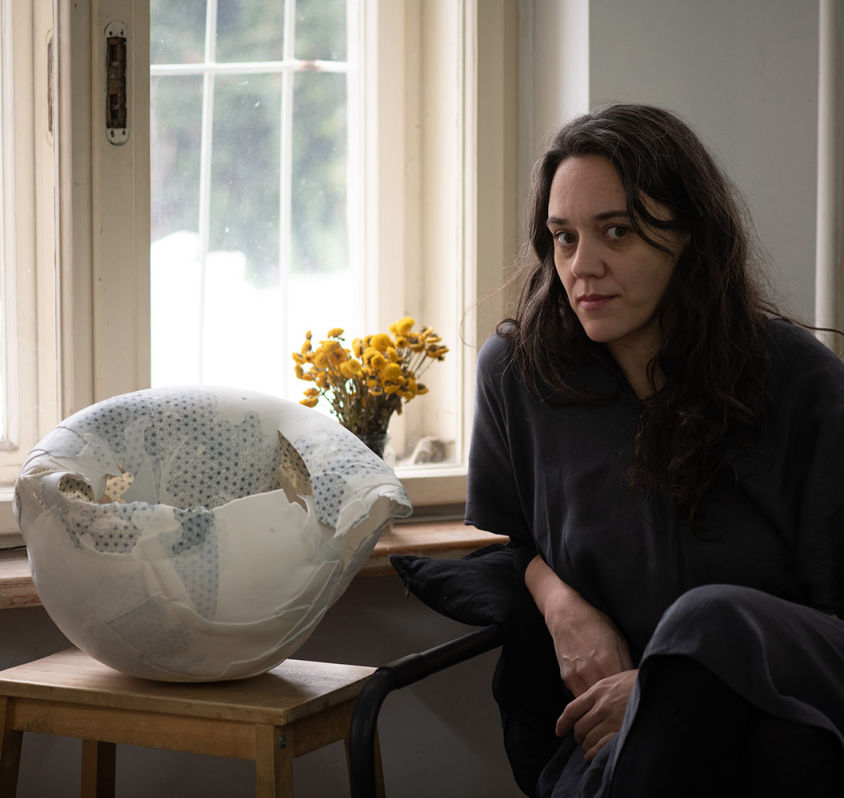
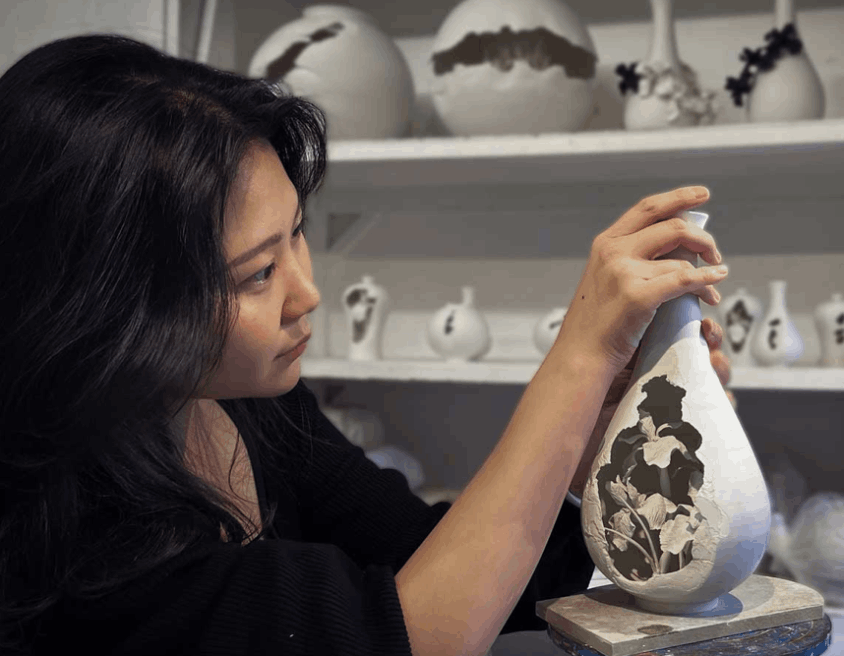
Saeri’s work merges personal narrative with social and cultural influences, visually reflecting her journey. Central to her art is the exploration of “good child syndrome,” shaped by Korean cultural background, which profoundly impacted her life. In response, Saeri deconstructs and reimagines traditional Korean ceramics, symbolising liberation from past constraints. Her work captures themes of personal growth, self-discovery, and healing, fostering introspection and dialogue. Contrasting with the fragmented pottery, the iris flower—symbolising hope—emerges as a testament to resilience and beauty born from transformation.
SaeRi Seo studied ceramics for her BA at Seoul Women’s University, and went on to complete a Masters in Ceramics and Makers at Cardiff Metropolitan University in 2022.
Artist website
SZÁVOSZT KATALIN
Hungary
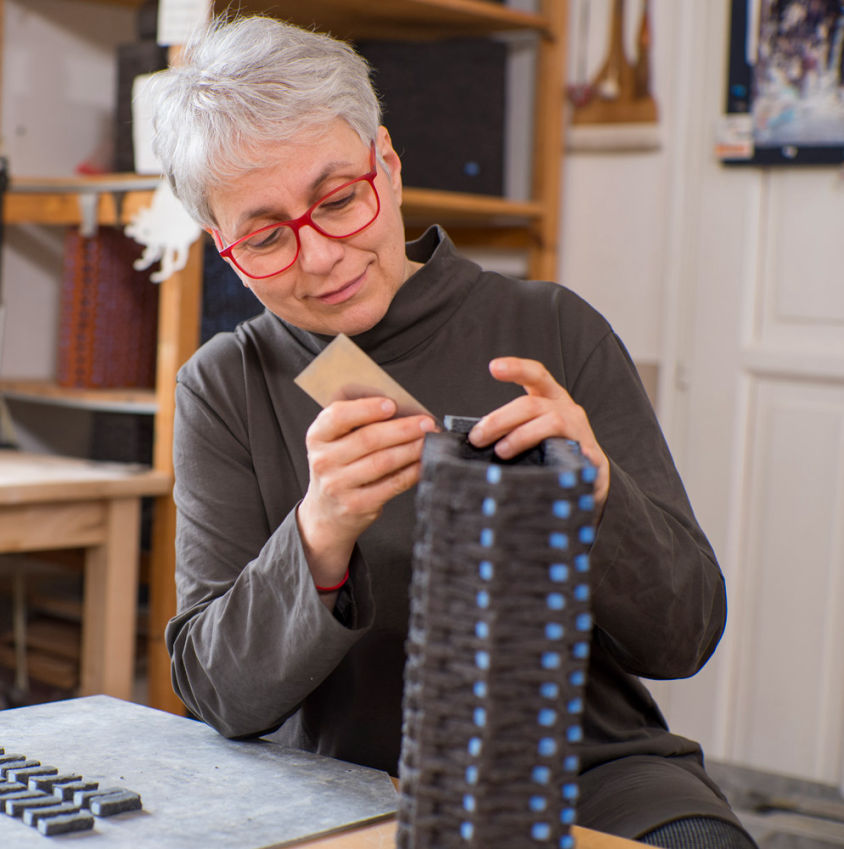
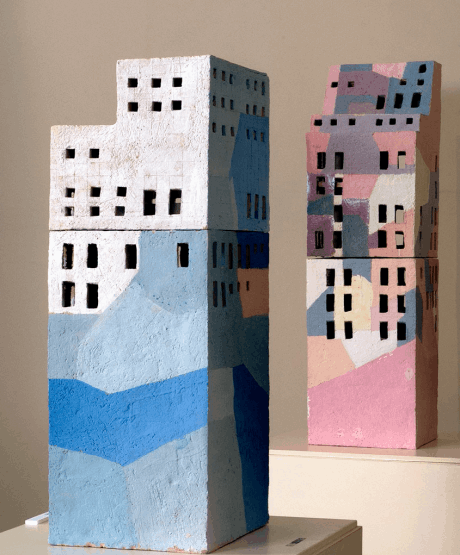
In the last decade the objects of Katalin Szávoszt's spatial works have been buildings, flags and gates. These works are closely related to art and art history at several points. They are not only its objects, but also its subjects and authentic means of expression carrying symbolic meaning, and of course, parts of them.
Her most recent ceramics are the descendants of these structures. Static experiments, playful spatial structures created from architectural elements. They have no defined function, so their metaphorical interpretation possibilities are amplified. The column-like objects placed in different relationships with each other go beyond simple experiments in balance, they also model human relationships.
A gate is a word denoting a larger entrance (and of course also an exit): the opening between outside and inside, through which we can pass, cross between two parts of space, two environments or even two states. It separates and connects at the same time..
Kápolna u.11,
Kecskemét 6000
Hungary
Phone:
+36 76 486867
Steve Mattison: icshu@me.com
Erika Sütő: studiovezeto@kkmm.hu
NKS Office: nks.kecskemet@gmail.com
SUBSCRIBE
Iratkozzon fel a magyar hírlevélre
FELIRATKOZÁS